 Peptide Grading
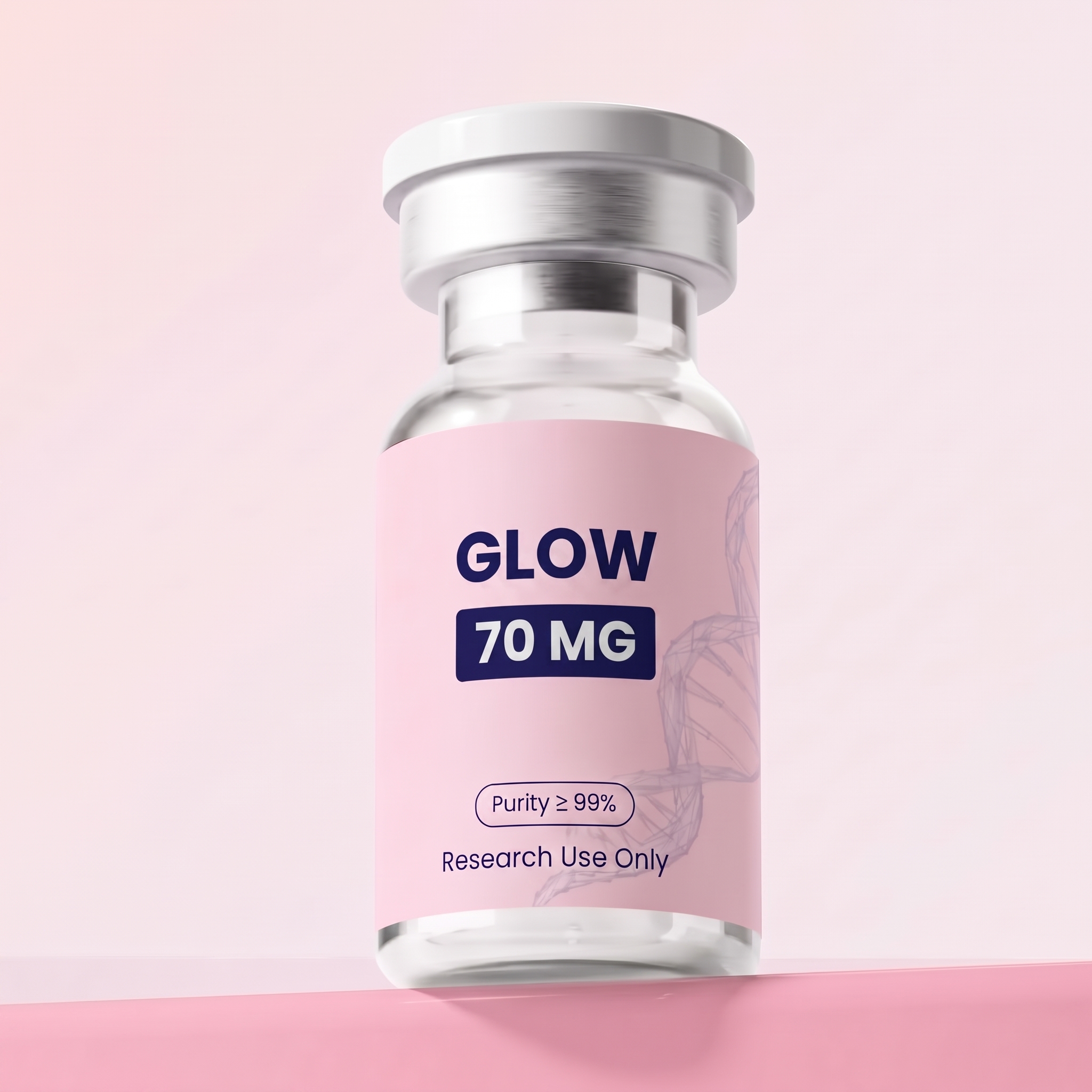
Research peptide
GLOW Blend
From
$45.00
Vendors
19
Lab tested
17 COAs
Key benefits
- Three repair peptides in one
- Aimed at skin and tissue recovery
- Pre-mixed single vial
Ask five vendors what's in GLOW and you'll mostly get the same answer: GHK-Cu, BPC-157 and TB-500 in one vial. That's the whole formula. The name is a marketing label, not a pharmacological category, and the pitch is simple: a skin peptide plus two repair peptides, sold as a two-in-one.
We pull GLOW listings from different vendors into one place, with vial size, price, shipping and COA links.
Typical dose
1.4–2.8 mg
No established frequency
Route
Subcutaneous injection
No established timing
Cycle
4–8 weeks.
Typical duration
Storage
2–8°C
Follow vendor guidance
Marketplace
Compare all GLOW Blend vendors
Prices per size, coupon codes, lab reports and shipping.
| Vendor | Price | Coupon | Lab test | Shipping | |
|---|---|---|---|---|---|
Reta One Labs 70 mg | $45.00 Lowest price$0.64/mg | 1 COA | 2 days
| Buy | |
Renova Peptides 70 mg | $49.00 $0.70/mg | No code | 1 COA | 3–5 days
| Buy |
 PepVida Labs 70 mg | $55.01$95.00 −42.1%$0.79/mg | Not on file | 1-3 days
| Buy | |
Amino Club 70 mg | $58.49$89.99 −35%$0.84/mg | 1 COA | 1–4 days
| Buy | |
Peptix USA 70 mg | $84.96$90.00 −5.6%$1.21/mg | 1 COA | 3–5 days
| Buy | |
HLX LABS 70 mg | $84.99$124.99 −32%$1.21/mg | 1 COA | 2–5 days
| Buy | |
Bionova Peptides 70 mg | $89.99 $1.29/mg | 1 COA | 1–3 days
| Buy | |
LA Peptides 70 mg | $89.99 $1.29/mg | 1 COA | 2–5 days
| Buy |
 United States
- No codeBuy
What is GLOW Blend?
GLOW Blend
Compound
GLOW Blend
The Three Peptides Side by Side
| Compound | Main structural feature | Length | Key distinction |
|---|---|---|---|
| What it is | Natural copper-binding tripeptide | Synthetic 15-amino-acid peptide from a gastric protein sequence | Synthetic fragment related to thymosin beta-4 |
| Main research area | Skin, collagen, wound healing | Tendon, gut and muscle repair (animal models) | Cell migration, actin binding |
| Proposed mechanism | Fibroblast and extracellular matrix signaling | Angiogenesis, nitric oxide signaling | Actin sequestering, cell motility |
| Human evidence | Most data, mainly topical and cosmetic | Very limited, one small observational knee-pain study | Close to none |
| WADA status | Not listed in the sources I found | Prohibited (S0) | Prohibited (S0) |
"Synergy" And What's Actually Known
Vendors love this word. The pitch is that GHK-Cu handles the skin matrix, BPC-157 handles protective signaling, and TB-500 handles cell movement, so together they cover more ground.
It's a tidy story, but I couldn't find a published study testing this combination. Each peptide has its own evidence, and the blend has none. "Synergy" here is a hypothesis.
## Not Every GLOW Vial is the Same
| Formulation | GHK-Cu | BPC-157 | TB-500 | Total | | Common version | 50 mg | 10 mg | 10 mg | 70 mg | | Alternate version | 27 mg | 5 mg | 10 mg | 42 mg |
Because ratios differ, two products both called "GLOW" can contain very different amounts of each peptide. Always read the label and the COA instead of assuming.
Safety and Regulatory Status
Approval: none of the three. Combination safety data: none.
Side effects tied to these products are anecdotal so far: injection-site redness, flushing. Nobody has run trials that would tell us how common or serious anything is, and long-term effects of peptides that promote angiogenesis are unstudied.
Legal status has been shifting. FDA listed BPC-157 and TB-500 under Category 2 in 2023. Reports of reclassification followed in early 2026, and the sources we found contradict each other.
Sport: WADA prohibits BPC-157 and TB-500 at all times. In 2025 a Canadian athlete received a four-year ban. The US military's OPSS program also prohibits BPC-157.
Research reference note
Compare listings
Check vendors, vial ratios, and [COA](/coas) documents side by side on [Peptide Grading](#vendor-listings). For research use only. Not for human consumption or self-administration.
FAQ
Frequently asked questions.
No. 50/10/10 is common, but amounts vary between sellers.