 Peptide Grading
 United States
01
Collagen and extracellular matrix remodeling
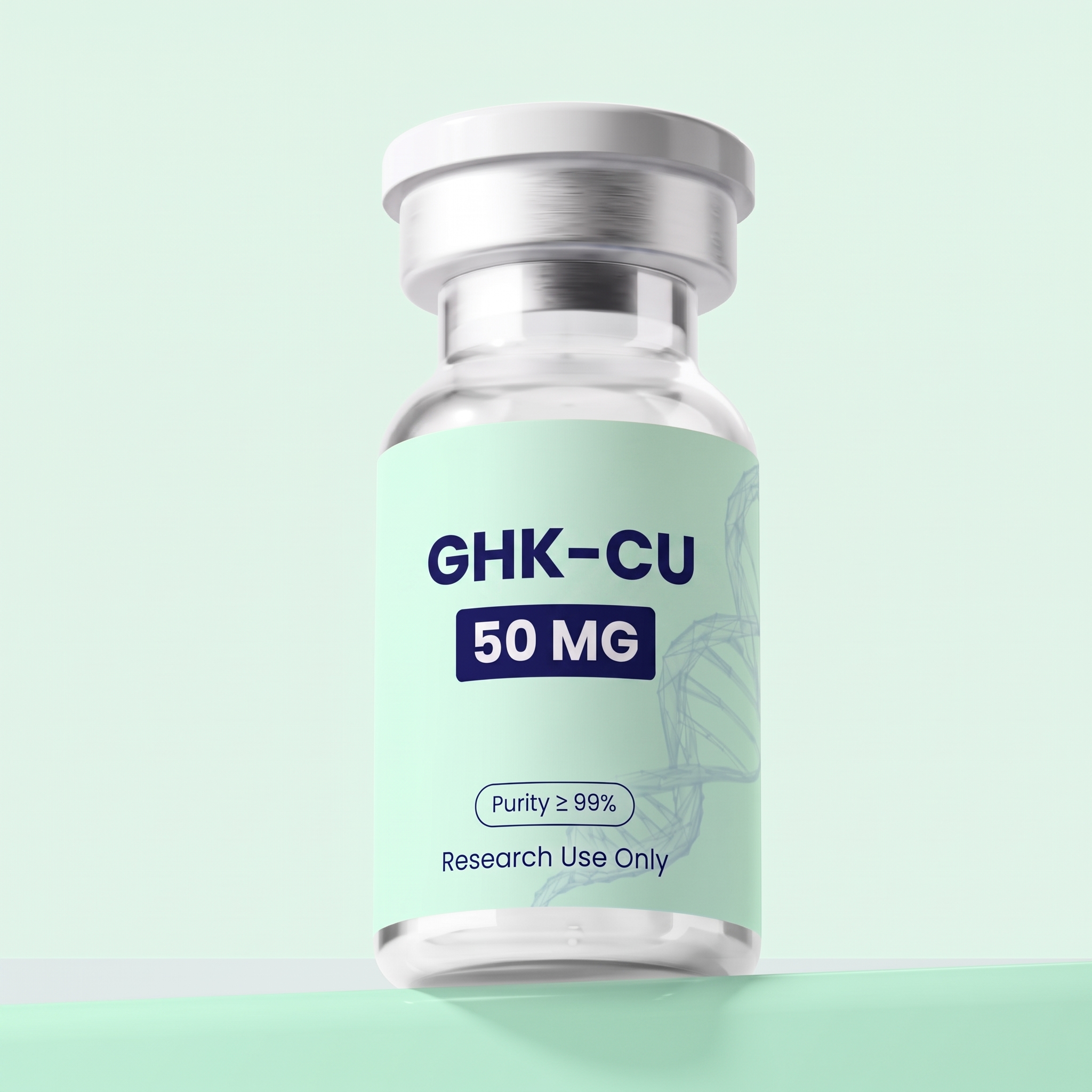
Research peptide
From
$17.50
Vendors
23
Lab tested
23 COAs
Key benefits
If you've ever seen a blue-tinted skincare serum, you've already met GHK-Cu. It's a copper-carrying tripeptide that was first pulled out of human blood plasma back in 1973, and it's been sitting in cosmetics for decades. What's newer is its life as a research peptide: vials of it, and blends like Glow and Klow that put it alongside BPC-157 and TB-500.
I'll say upfront that GHK-Cu is a bit unusual in this catalog. It has a long research history, and the skin-care version is a mainstream cosmetic ingredient. But no GHK-Cu drug is approved by the FDA, and the injectable side is much less studied than the creams. On Peptide Grading, we line up the research-labeled listings, with vendors, sizes, price per mg, and COAs, so you can see the differences. A listing isn't a recommendation to use it.
Typical dose
0.5-2%
Once or twice daily
Route
Subcutaneous
Injection: Once or twice daily. Topical: Apply to clean skin morning and/or night.
Cycle
12-16 weeks
Typical duration
Storage
Room temp
Follow vendor guidance
Marketplace
Prices per size, coupon codes, lab reports and shipping.
| Vendor | Price | Coupon | Lab test | Shipping | |
|---|---|---|---|---|---|
Bionova Peptides 50 mg | $17.50$35.00 Lowest price−50%$0.35/mg | 1 COA | 1–3 days
| Buy | |
Renova Peptides 100 mg | $18.00 $0.18/mg | No code | 1 COA | 3–5 days
| Buy |
Amino Club 50 mg | $19.49$29.99 −35%$0.39/mg | 1 COA | 1–4 days
| Buy | |
idunpeptides 50 mg | $19.99 $0.40/mg | 1 COA | 3–7 days
| Buy | |
HLX LABS 50 mg | $24.98$34.99 −28.6%$0.50/mg | 1 COA | 2–5 days
| Buy | |
Crownwell Research 50 mg | $29.00 $0.58/mg | 2 COAs | 1-5 days
| Buy | |
Reta One Labs 50 mg | $29.00 $0.58/mg | 2 COAs | 2 days
| Buy | |
Biologix Labs 50 mg | $29.99$39.99 −25%$0.60/mg | 1 COA | 2 Days
| Buy |
Compound
GHK-Cu
The peptide part is only three amino acids: glycine, histidine, lysine. What makes it interesting is how tightly it grabs a copper ion. Biochemist Loren Pickart spotted it while studying why older liver tissue behaved differently from younger tissue, and he later noted that levels of GHK in blood seem to fall as people age. That observation is a big reason it got attention. Whether it means anything for supplementation is a different question, and nobody has answered it.
01
Collagen and extracellular matrix remodeling
02
Wound repair in cell and animal models
03
Gene expression changes (Pickart's group has published several analyses)
04
Copper transport and antioxidant pathways
05
Skin and hair tissue models
| Compound | Main structural feature | Length | Key distinction |
|---|---|---|---|
| GHK-Cu | Peptide plus copper | The one in most research vials | |
| GHK | Same peptide, no copper | Behaves differently; don't swap them | |
| AHK-Cu | Different tripeptide, also copper | A famous hair study used this, not GHK-Cu | |
| Glow / Klow blends | GHK-Cu with other peptides | Ratio matters; GHK-Cu is most of the vial |
That AHK-Cu mix-up shows up a lot online. If a page cites a hair study for GHK-Cu, check which peptide it actually tested.
Honestly, the evidence has two very different halves. The topical half is real: copper-peptide creams have been used and studied in small human trials for years. The injectable and research-vial half is mostly animal and cell work. Wound healing, tissue repair, and even lung fibrosis show up in animal studies, but those results don't carry over automatically to people, and long-term human data on injected GHK-Cu doesn't exist.
GHK-Cu isn't an approved drug for any use. The FDA's position on it for compounding has been shifting. The topical form has been under evaluation, while the injectable form has been flagged for safety concerns, and some sources describe changes during 2026. If the legal status matters to you, check the FDA's compounding pages directly, since a summary like this one can go stale.
Copper is another thing to keep in mind. It's a nutrient, but too much of any copper product is a theoretical concern, which is one more reason the quality of a vial matters.
GHK-Cu isn't named on the WADA Prohibited List, though some testing bodies could treat it as covered by the broad "unapproved substances" clause, so athletes in tested sports should confirm with their anti-doping organization first.
FAQ
No. Topical products, injectables, and research vials are separate product classes with different testing and different evidence.