
100+ Vendors
50+ Compounds
100+ Vendor COAs
Price/MG Comparison
Exclusive Coupons
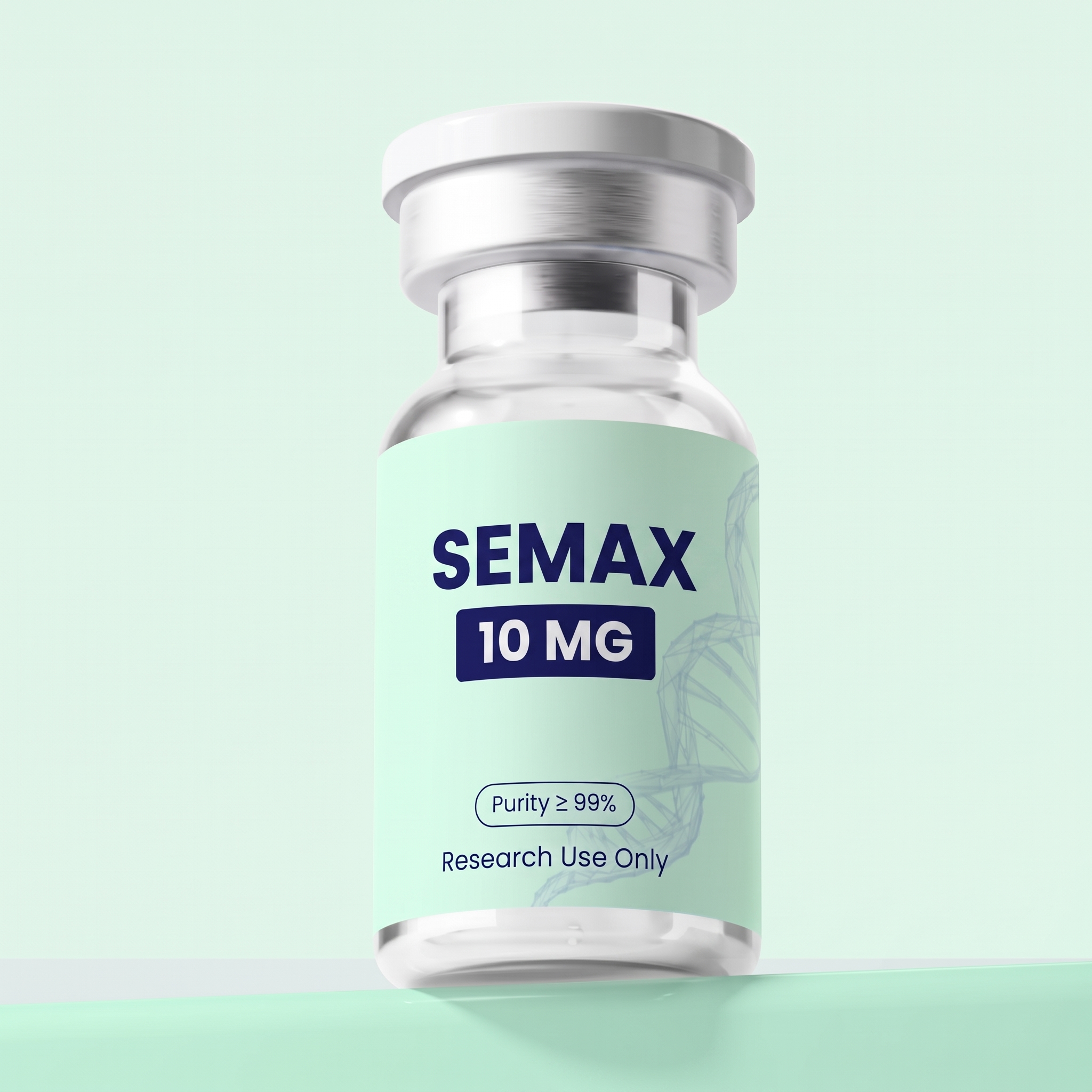
Semax

Research peptide

Semax

Phase I–II Clinical TrialsNootropic / NeuroprotectiveNeurotrophic Factor UpregulationCognitive Enhancement

From

$24.98

Vendors

19

Lab tested

2 COAs

Key benefits

  • Raised BDNF in rat studies
  • Used for stroke recovery in Russia
  • Better learning in animals
  • Delivered as a nasal spray

Semax is a synthetic seven-amino-acid peptide derived from ACTH(4–7) with an added Pro-Gly-Pro sequence. Research has mainly examined its effects on neurotrophic signaling, cerebral ischemia, and cellular responses in the nervous system.

The evidence includes experimental studies and some clinical research, but its clinical and regulatory status varies by jurisdiction.


Typical dose

300-1000mcg 1-3 times daily

1-2 times daily

Route

Intranasal spray

Best used in the morning or early afternoon. Effects typically felt within 15-30 minutes of intranasal administration.

Cycle

2-4 weeks on, 1-2 weeks off Typical duration

Storage

2-8°C Refrigerated

Follow vendor guidance

Marketplace

Compare all Semax vendors

Prices per size, coupon codes, lab reports and shipping.

19 offers
SEMAX SEQUENCE

What is the sequence of Semax?

Semax is a seven-amino-acid peptide with the sequence MEHFPGP.

7 AMINO ACIDS MEHFPGP
COMPOUND PROFILE

Semax Scientific Profile

Investigational
Compound Semax
Peptide type Synthetic neuropeptide
Sequence MEHFPGP
Parent fragment ACTH(4–7)
Amino acids 7
Molecular formula C₃₇H₅₁N₉O₁₀S
Molecular weight 813.9 g/mol
CAS Number 80714-61-0
Research status Investigational

PubChem identifies Semax as ACTH(4–7), Pro-Gly-Pro-, with the sequence MEHFPGP and molecular weight of about 813.9 g/mol.


What Makes Semax Different From ACTH Fragments?

Semax was designed from the ACTH(4–7) region but includes a C-terminal Pro-Gly-Pro sequence. This modification distinguishes it from the shorter ACTH fragment and is central to its identity as a separate research peptide.

PARENT REGION ACTH(4–7)
+
C-TERMINAL SEQUENCE Pro-Gly-Pro
→
SEMAX MEHFPGP

Research has investigated whether this structure influences neurotrophin-related signaling and responses to cerebral ischemia.


Semax and Neurotrophic Signaling

One research direction focuses on neurotrophins such as BDNF, NGF, and Trk receptors.

01 BDNF Brain-derived neurotrophic factor
02 NGF Nerve growth factor
03 TrkA Neurotrophin receptor
04 TrkC Neurotrophin receptor
i

In an experimental ischemia model, Semax increased transcription of several neurotrophin and receptor genes, including BDNF, TrkA, TrkC, and NGF. These findings provide a proposed molecular basis for further investigation, rather than proof of an established human mechanism.


Where Has Semax Been Studied?

Research has focused particularly on neurological conditions and cerebral ischemia.

01

Experimental cerebral ischemia

02

Neurotrophic signaling

03

Post-stroke rehabilitation research

04

Cerebrovascular disorders

05

Cognitive and behavioral models

Some human studies have reported changes in neurological or rehabilitation measures after ischemic stroke, but these studies were conducted in specific clinical settings and do not establish Semax as an FDA-approved treatment.


Semax vs Related Peptide Research

Semax is often discussed alongside Pro-Gly-Pro (PGP) because PGP forms its C-terminal sequence. Experimental work has examined both compounds to determine whether some Semax-associated transcriptional effects can be linked to this smaller peptide fragment.

Feature Semax Pro-Gly-Pro
Type Synthetic heptapeptide Tripeptide
Sequence MEHFPGP PGP
ACTH-derived region ACTH(4–7) None
Neurotrophin research Yes Yes
Human clinical evidence Limited Much more limited

Animal research found overlapping but not identical transcriptional responses from Semax and PGP, suggesting that the two compounds should not be treated as interchangeable.


Safety and Regulatory Status

Investigational

Current evidence does not establish a complete human safety profile for Semax.

In its 2026 evaluation, the FDA reported concerns about potential immunogenicity, aggregation, and peptide-related impurities for Semax free base and Semax acetate. FDA also stated that it did not identify published clinical studies assessing Semax immunogenicity. Neither form is a component of an FDA-approved drug, and there is no applicable USP/NF drug-substance monograph.

FDA REVIEW 2026

Semax free base and Semax acetate were reviewed in the context of compounded bulk drug substances.

FDA discussed Semax-related bulk substances at its July 2026 Pharmacy Compounding Advisory Committee meeting. The agency's review considered historical use and proposed uses but does not establish FDA approval for Semax.

What the evidence shows

Semax is approved as a medicine in Russia and some nearby countries. Its clinical evidence comes mainly from Russian studies that are hard to access and often lack the design of modern placebo-controlled trials.

Animal research on brain growth factors and stroke is more extensive. Western clinical trials are essentially absent.

Safety and regulatory position

Approved in Russia · not FDA-approved

Semax is a registered medicine in Russia but is not approved by FDA or in Europe. In April 2026 FDA removed it from Category 2, its list of bulk substances flagged for safety concerns in compounding. That is not an approval: an FDA advisory committee reviewed it in July 2026, and no rule allowing pharmacies to compound it has been finalized.

Russian use reports few side effects, mainly nasal irritation. Long-term safety hasn't been studied to Western standards.

Research-grade material sold online is not an approved drug. Its identity, purity and amount can't be assumed without independent testing, so check the vendor's batch COA.

FAQ

Frequently asked questions.

ACTH (4-10) analog that may enhance BDNF levels and modulate neurotransmitter systems without hormonal effects.