 Peptide Grading
 United States
01
Mitochondrial and cellular energy metabolism
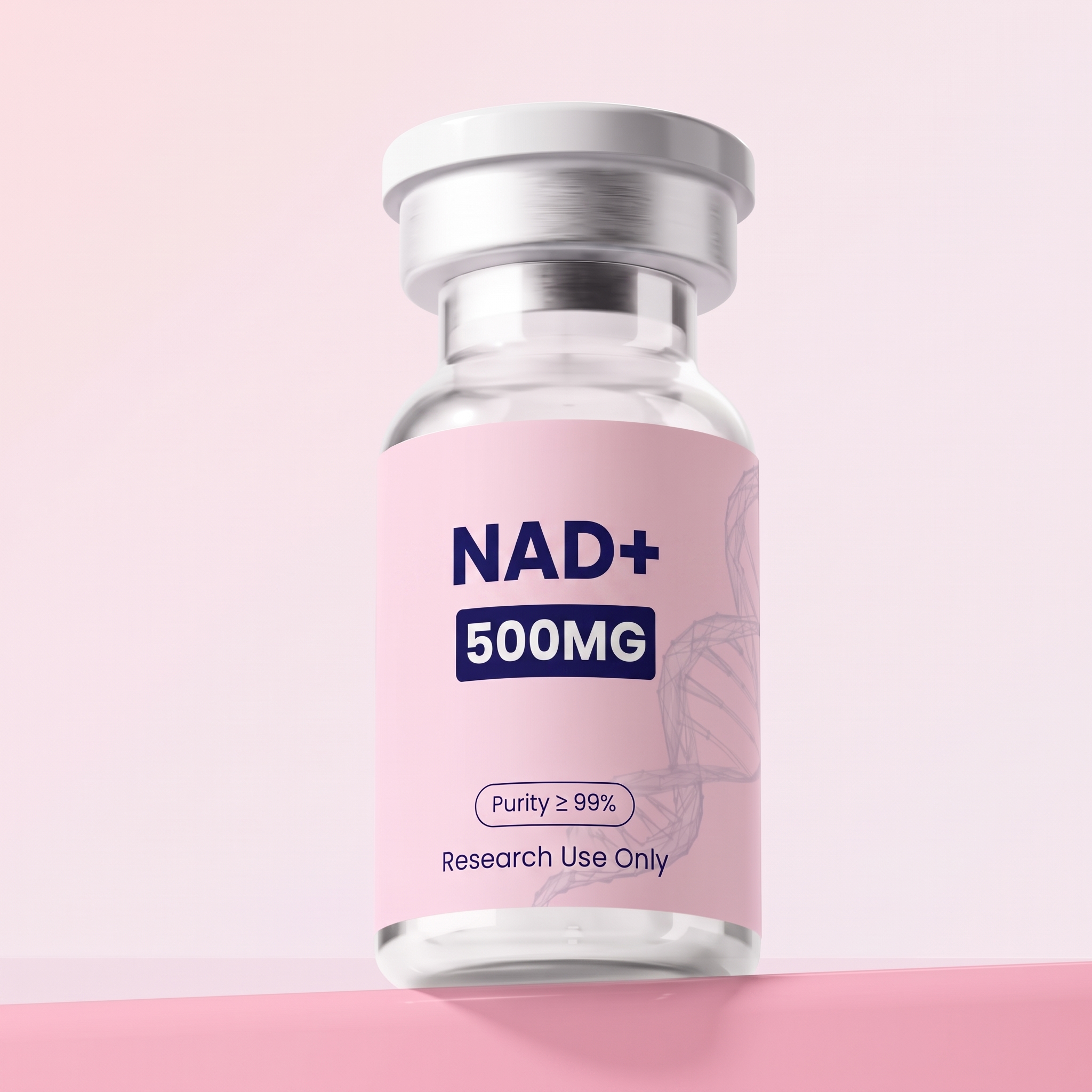
Research peptide
From
$39.00
Vendors
19
Lab tested
2 COAs
Key benefits
NAD+ (nicotinamide adenine dinucleotide) is a naturally occurring cellular coenzyme involved in energy metabolism, redox reactions, and several signaling pathways. It is found throughout living cells and continuously shifts between its oxidized NAD+ and reduced NADH forms.
Unlike peptide compounds, NAD+ is a dinucleotide, making its research profile quite different from synthetic peptide products.
Typical dose
100-1000mg 1-3x weekly
Daily for 3-5 days
Route
Intravenous
IV infusions are administered slowly over 2-4 hours (rapid infusion causes chest tightness and nausea). Subcutaneous injections can be given at any time. Oral NMN/NR is typically taken in the morning to align with circadian NAD+ rhythms.
Cycle
4-12 weeks Typical duration
Storage
2–6°C2-8°C Refrigerated
Follow vendor guidance
Marketplace
Prices per size, coupon codes, lab reports and shipping.
| Vendor | Price | Coupon | Lab test | Shipping | |
|---|---|---|---|---|---|
Renova Peptides 500 mg | $39.00 Lowest price$0.08/mg | No code | Not on file | 3–5 days
| Buy |
Reta One Labs 500 mg | $46.00 $0.09/mg | Not on file | 2 days
| Buy | |
Crownwell Research 500 mg | $55.00 $0.11/mg | Not on file | 1-5 days
| Buy | |
Trulab Peptides 500 mg | $55.00 $0.11/mg | Not on file | 2–5 days
| Buy | |
Peptix USA 100 mg | $57.99$76.00 −23.7%$0.58/mg | Not on file | 3–5 days
| Buy | |
PRPEPS 500 mg | $60.00 $0.12/mg | Not on file | 2 days
| Buy | |
Synthesis Peptides 500 mg | $63.99 $0.13/mg | Not on file | 2–5 days
| Buy | |
Amino Club 500 mg | $69.99 $0.14/mg | Not on file | 1–4 days
| Buy |
Compound
NAD+
Specifications may vary by salt, counterion, or material form. The values above refer to the NAD+ form catalogued by PubChem.
NAD+ works as an electron carrier in numerous metabolic reactions. During redox reactions, it accepts electrons and hydrogen to form NADH.
Its role extends beyond energy metabolism. NAD+ is also consumed by enzyme families including sirtuins, PARPs, and CD38, linking NAD+ availability with cellular signaling and metabolic regulation.
Current research examines NAD+ because cellular NAD+ pools are connected with several biological processes. Research areas include:
01
Mitochondrial and cellular energy metabolism
02
Redox balance
03
DNA damage responses
04
Sirtuin-dependent signaling
05
PARP activity
06
Cellular stress responses
07
Age-related changes in NAD+ metabolism
Human research is increasingly focused on how NAD+ availability changes with age and whether NAD+ metabolism can be influenced through precursor compounds. However, clinical evidence does not support treating NAD+ biology as a single, established therapeutic pathway.
These compounds are often grouped online, but they are not interchangeable.
| Compound | Main structural feature | Length | Key distinction |
|---|---|---|---|
| NAD+ | Dinucleotide coenzyme | Active NAD+ form | Cellular metabolism and signaling |
| NMN | NAD+ precursor | Converted through NAD+ biosynthesis | NAD+ replenishment research |
| NR | NAD+ precursor | Enters NAD+ salvage pathways | NAD+ availability in humans |
| NADH | Reduced NAD form | Redox counterpart of NAD+ | Electron transfer and redox biology |
NMN and NR are precursors, not alternative names for NAD+. Research has specifically investigated whether these compounds can increase intracellular NAD+ levels. NADH is different again: it is the reduced form of NAD+, created when NAD+ accepts reducing equivalents during metabolic reactions.
Human research on NAD+ metabolism is broader than direct NAD+ supplementation alone. A substantial portion of clinical research has focused on NAD+ precursors such as NR and NMN, because these compounds can enter NAD+ biosynthetic pathways.
A 2026 systematic review identified 33 human intervention studies and 80 rodent studies involving NAD-related compounds, showing that the field is active but still developing.
This distinction matters when evaluating research products: evidence for an NAD+ precursor should not automatically be presented as evidence for the NAD+ molecule itself.
NAD+ is a naturally occurring molecule, but that does not mean every research formulation, route, or intended use has an established clinical safety profile.
Research findings depend on the specific NAD+ preparation, study design, administration method, and population. Clinical evidence for NAD+ interventions remains an evolving area, particularly compared with the extensive biochemical literature on NAD+ itself.
Research reference note
For researchers comparing NAD+ products, [Peptide Grading](#vendor-listings) provides a practical way to review available listings, specifications, supplier information, and supporting documentation side by side.
FAQ
No. NAD+ is a dinucleotide coenzyme made from two nucleotide units.