
100+ Vendors
50+ Compounds
100+ Vendor COAs
Price/MG Comparison
Exclusive Coupons
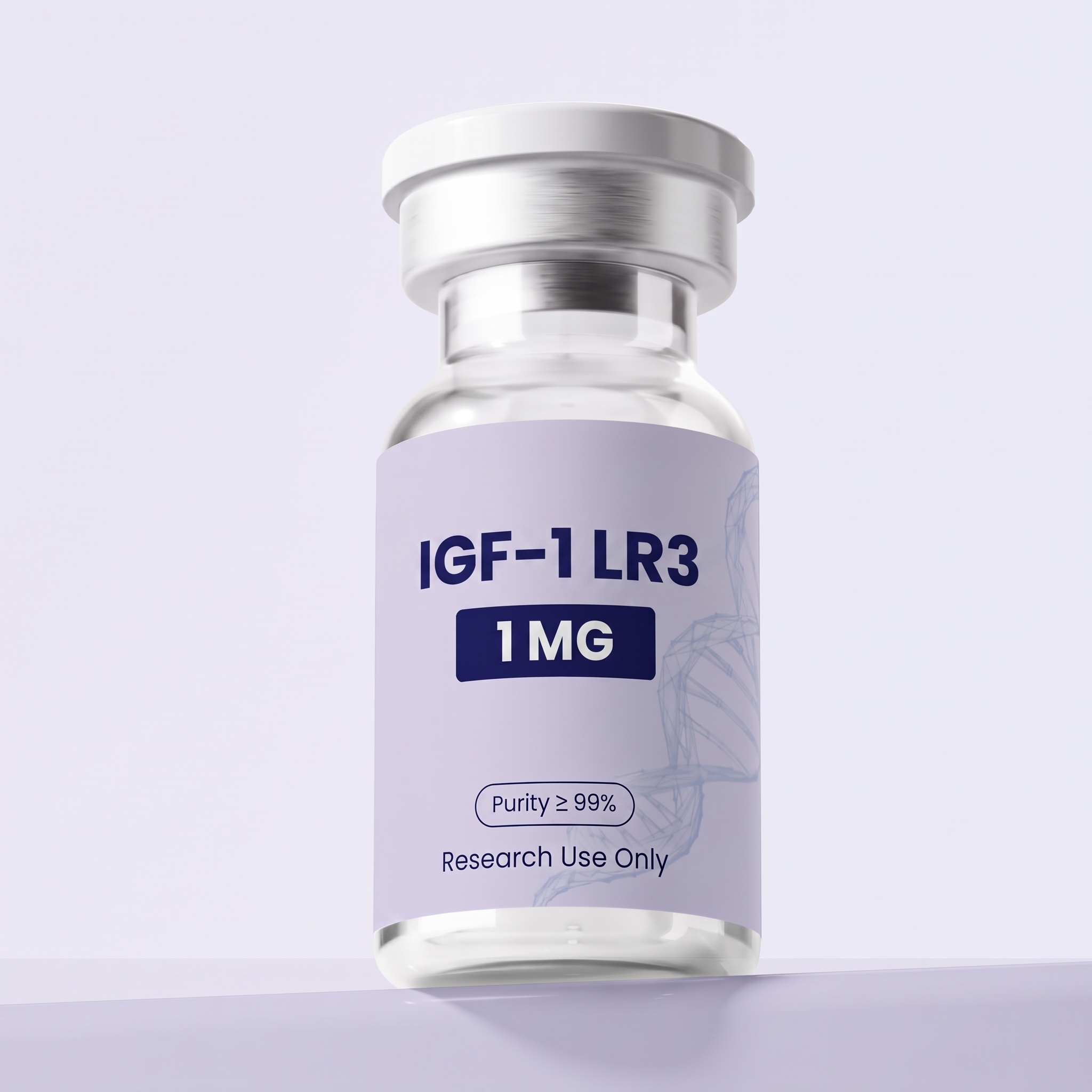
IGF-1 LR3

Research peptide

IGF-1 LR3

Animal/Preclinical OnlyGrowth FactorGrowth Hormone SignalingBody CompositionInjury Recovery

From

$32.50

Vendors

16

Lab tested

3 COAs

Key benefits

  • Long-acting IGF-1 analog
  • Supports cell growth in the lab
  • Restored growth in diabetic rats

IGF-1 LR3, also called Long R3 IGF-1, is a recombinant analogue of human insulin-like growth factor 1. Its structure combines a 13-amino-acid N-terminal extension with an arginine substitution at position 3 of the mature IGF-1 sequence.

These changes were designed to alter how the molecule interacts with IGF-binding proteins while retaining activity at the IGF-1 receptor. Research has therefore used IGF-1 LR3 as a tool for studying IGF signaling, cell growth, protein synthesis, and growth-factor biology.


Typical dose

20-100mcg (research range) Once daily

Route

Subcutaneous

Administered via subcutaneous or intramuscular injection once daily. Some research protocols time injections post-exercise for localized effects. Bilateral injection (split between muscle groups) is used in some protocols.

Cycle

4-6 weeks maximum Typical duration

Storage

-20°C to -80°C (lyophilized) Refrigerated

Follow vendor guidance

Marketplace

Compare all IGF-1 LR3 vendors

Prices per size, coupon codes, lab reports and shipping.

16 offers
IGF-1 LR3 PROFILE

What is IGF-1 LR3?

IGF-1 LR3 (Long R3 Insulin-like Growth Factor-1) is a synthetic, modified form of human IGF-1 designed to have a longer half-life and greater biological activity than natural IGF-1.

STRUCTURAL R3 igf-1 Long-form IGF-I analogue
SCIENTIFIC PROFILE

IGF-1 LR3

Investigational / Preclinical
Compound IGF-1 LR3
Alternative name Long R3 IGF-I / Long [Arg3]-IGF-I
Compound type Recombinant IGF-1 analogue
Sequence length 83 amino acids
N-terminal extension MFPAMPLSSLFVN
Key modification Glu3 → Arg3
Molecular weight Approximately 9.1 kDa
Registry identifier CAS 143045-27-6
Research status Investigational/preclinical

FDA’s Substance Registration System lists 143045-27-6 for Long-(Arg3)-IGF-I. Some commercial sources use different identifiers, so lot-specific documentation should be checked.


Why the “LR3” Design Matters

The name describes the molecule’s two defining structural features.

LONG 13-residue N-terminal extension

“Long” refers to the 13-residue N-terminal extension.

R3 Glu3 → Arg3

“R3” refers to arginine replacing glutamic acid at position 3 of the mature IGF-1 sequence.

The original work showed that these changes substantially reduce interaction with IGF-binding proteins in relevant experimental systems. That distinction is important because IGFBPs normally regulate how much IGF-1 remains available to interact with its receptors.


What Researchers Use IGF-1 LR3 to Investigate

IGF-1 LR3 has mainly served as an experimental analogue for studying the biology of the IGF system.

01

IGF-1 receptor signaling

02

IGF-binding protein interactions

03

Protein and DNA synthesis

04

Cellular growth responses

05

Muscle and tissue biology

06

Metabolic and developmental models

i

The published evidence spans cell experiments and animal studies. Results are not uniform across species or models, which is one reason LR3 should not be described as having an established human effect.

For example, early rat research found stronger biological activity for LR3-related analogues in some experimental settings, while later animal studies showed that responses could differ substantially between species.


IGF-1 LR3 vs Other IGF-I Analogues

IGF-1 LR3 is easy to confuse with several closely related research compounds. Their structural differences matter.

Compound Main structural feature Length Key distinction
IGF-1 LR3 13-aa extension + Arg3 83 aa Long-form IGF-I analogue
Native IGF-1 Unmodified mature IGF-I 70 aa Endogenous IGF-I sequence
R3 IGF-1 Arg3 substitution only 70 aa No N-terminal extension
Des(1-3) IGF-1 First 3 residues removed 67 aa Truncated IGF-1 analogue

These compounds should not be treated as interchangeable. R3 IGF-I lacks the Long extension, while Des(1-3) IGF-I removes the first three residues entirely. Published research has evaluated these structural variants separately because their interactions with IGFBPs and receptors can differ.


What the Evidence Actually Shows

The strongest evidence for IGF-1 LR3 comes from experimental models rather than human clinical research.

Cell studies have demonstrated activity through IGF-related signaling systems, while animal experiments have investigated effects on growth, tissue responses, and endocrine regulation. Importantly, animal findings have not been consistent across species; for example, one pig study reported reductions in growth-related measures following Long R3 IGF-I exposure.

EVIDENCE LIMITATION

This variation is scientifically useful because it shows why results from one model cannot automatically be transferred to humans.


Safety and Regulatory Position

Investigational

IGF-1 LR3 does not have an established FDA-approved therapeutic indication.

FDA documents have previously identified IGF1-LR3 among bulk substances used by a compounding firm that did not qualify for the applicable 503A exemptions. FDA also distinguishes compounded products from FDA-approved medicines and notes that compounded drugs are not reviewed by the agency for safety, effectiveness, or quality before marketing.

KEY LIMITATION

For research purposes, the key limitation is the lack of an established human clinical safety and efficacy profile for IGF-1 LR3 itself.


WADA STATUS

IGF-1 LR3 and WADA Status

The 2026 WADA Prohibited List places IGF-1 and its analogues under S2.3, Growth Factors and Growth Factor Modulators, prohibited at all times.

CLASSIFICATION S2.3

Growth Factors and Growth Factor Modulators

Analytical research has also specifically developed detection methods for LongR3-IGF-I and related IGF-I analogues, including mass-spectrometry approaches for anti-doping testing.

What the evidence shows

IGF-1 LR3 was developed as a research and cell-culture reagent. Evidence comes from lab and animal studies; it has never been tested in a published human trial.

A different, natural-sequence IGF-1 drug (mecasermin, sold as Increlex) is approved for rare IGF-1 deficiency in children, but those data don't apply to LR3.

Safety and regulatory position

Not approved · no human data

IGF-1 LR3 is not approved for human use anywhere and has no published human safety data. IGF-1 acts like insulin, so low blood sugar (hypoglycemia) is the main immediate risk. Sustained IGF-1 activity is also linked to tissue overgrowth and, in long-term studies of IGF-1 levels, to cancer risk.

It is prohibited in sport at all times under the WADA list (S2 peptide hormones and growth factors). Research-grade material sold online is not an approved drug. Its identity, purity and amount can't be assumed without independent testing, so check the vendor's batch COA.

FAQ

Frequently asked questions.

IGF-1 LR3, also searched as IGF1 LR3 or Long R3 IGF-1, is a modified insulin-like growth factor analog with an extended half-life, researched for muscle growth and cellular proliferation.
