
100+ Vendors
50+ Compounds
100+ Vendor COAs
Price/MG Comparison
Exclusive Coupons
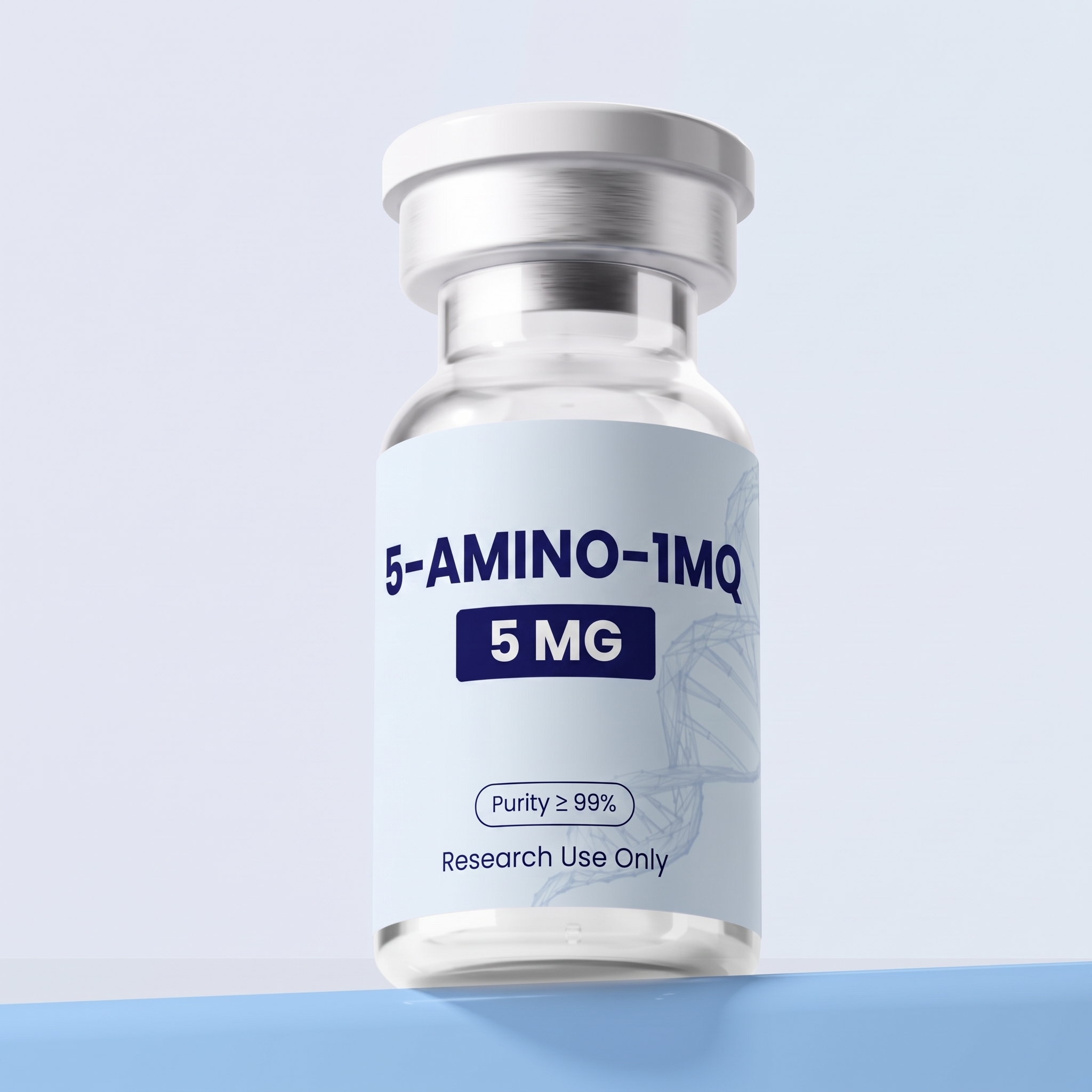
5-Amino-1MQ

Research peptide

5-Amino-1MQ

Animal/Preclinical OnlyMetabolic / Fat LossWeight Management

From

$19.99

Vendors

19

Lab tested

2 COAs

Key benefits

  • Fat loss in obese mice
  • Blocks the NNMT enzyme
  • May raise NAD+ in fat cells
  • Studied for muscle aging in mice

5-Amino-1MQ is a small-molecule inhibitor of nicotinamide N-methyltransferase (NNMT). Unlike peptide compounds, it is a quinolinium-based molecule studied mainly in cell and animal models to understand NNMT activity, methylation metabolism, and related NAD+ pathways.

Current evidence remains preclinical, with no established human clinical profile.


Typical dose

50–150 mg/day orally

Once daily

Route

Oral

Taken orally, typically once daily in the morning or split into two doses (morning and afternoon). Can be taken with or without food. Some protocols recommend taking it away from NAD+ precursors to avoid theoretical metabolic competition.

Cycle

8–12 weeks

Typical duration

Storage

Cool, dry place, protected from light and moisture; keep sealed.

Follow vendor guidance

Marketplace

Compare all 5-Amino-1MQ vendors

Prices per size, coupon codes, lab reports and shipping.

19 offers
COMPOUND PROFILE

5-Amino-1MQ: Key Details

Preclinical
Compound 5-Amino-1MQ
Chemical name 5-Amino-1-methylquinolinium
Compound type Small-molecule NNMT inhibitor
Molecular formula C₁₀H₁₁N₂⁺
Molecular weight 159.21 g/mol
CAS Number 685079-15-6
PubChem CID 950107
Research status Preclinical

The values above refer to the 5-amino-1-methylquinolinium cation. Salt forms may have different molecular weights and formulas.


Why NNMT Matters in 5-Amino-1MQ Research

NNMT is an enzyme that transfers a methyl group from S-adenosyl-L-methionine (SAM) to nicotinamide, producing 1-methylnicotinamide (MNA).

INPUT Nicotinamide
→
ENZYME NNMT
→
OUTPUT 1-Methylnicotinamide

5-Amino-1MQ was developed as a compound capable of inhibiting this enzyme. In biochemical testing, it showed an NNMT IC₅₀ of about 1.2 µM and demonstrated high membrane permeability compared with several related methylquinolinium compounds.

RESEARCH CONTEXT

This makes 5-Amino-1MQ useful as a research tool for examining how NNMT activity affects cellular metabolism.


What Has 5-Amino-1MQ Been Studied For?

Most published work has focused on metabolic and cellular models rather than human research.

01

NNMT enzyme activity and inhibition

02

NAD+ and methylation-related metabolism

03

Adipocyte metabolism

04

Diet-induced obesity models

05

Glucose and insulin-related metabolic measures

06

Skeletal muscle function in aged mice

i

Some mouse studies reported changes in body weight, adipose tissue and metabolic measurements after NNMT inhibition. These findings remain animal-model results and should not be interpreted as established effects in humans.


5-Amino-1MQ Compared With Other NNMT Inhibitors

5-Amino-1MQ is part of a broader research effort to develop small molecules that target NNMT. Other compounds have been designed with different chemical structures and mechanisms of interaction with the enzyme.

Feature 5-Amino-1MQ JBSNF-000088 JBSNF-000028
Compound type Small molecule Small molecule Small molecule
Main target NNMT NNMT NNMT
Chemical class Methylquinolinium Nicotinamide analogue Tricyclic inhibitor
Reported research stage Preclinical Preclinical Preclinical
Human clinical data Not established Not established Not established

JBSNF-000088 acts as a slowly turned-over substrate analogue of NNMT, while JBSNF-000028 belongs to a later tricyclic inhibitor series. Their inclusion here shows the wider development of NNMT-targeting compounds rather than establishing clinical superiority between them.


How Strong Is the Evidence?

The evidence for 5-Amino-1MQ currently comes from in-vitro experiments and animal models.

The original research demonstrated NNMT inhibition and effects in cellular and mouse models. Later studies continued investigating NNMT inhibition in areas such as metabolic function and age-related muscle research.

EVIDENCE LIMITATION

There is an important limitation: findings from these models do not establish the same effects, safety, pharmacokinetics, or therapeutic value in humans.


Safety and Regulatory Status

Preclinical

Human safety data for 5-Amino-1MQ have not been established. There is also no validated human pharmacokinetic profile or established human clinical use.

FDA January 2026

In January 2026, the FDA identified 5-amino-1-methylquinolinium iodide (5-Amino-1MQ) in a warning letter to GenoGenix LLC. The agency stated that the substance was not eligible for the section 503B compounding exemptions discussed in that letter because it was not on the 503B bulk drug substances list and was not being used to compound a drug on the drug-shortage list.

This regulatory action concerns the specific compounding pathway and facility described by FDA; it should not be presented as evidence of either clinical efficacy or toxicity.


RESEARCH REFERENCE NOTE

Research Reference Note

5-Amino-1MQ is best described as a preclinical NNMT inhibitor. Current literature supports its use as a research compound for studying NNMT biology, but human efficacy, safety, pharmacokinetics, and clinical applications remain unestablished.

What the evidence shows

5-Amino-1MQ is a small molecule, not a peptide. All published evidence comes from cell experiments and mouse studies, mainly from one research group.

It has never been tested in a published human trial, so effects, safety and dosing in people are unknown.

Safety and regulatory position

Not approved · animal data only

5-Amino-1MQ is not approved for any use and has no published human safety data. Its long-term effects on NAD+ metabolism, methylation and other organs are unknown.

It is sold online as a research chemical, often in capsules. Research-grade material sold online is not an approved drug. Its identity, purity and amount can't be assumed without independent testing, so check the vendor's batch COA.

FAQ

Frequently asked questions.

5-Amino-1MQ is an NNMT (nicotinamide N-methyltransferase) inhibitor being researched for its potential effects on fat metabolism and cellular energy regulation. It represents an emerging target in metabolic research.