 Pep Grading
 United States
Cognitive benefits of angiotensin IV and angiotensin-(1-7): A systematic review of experimental studies.
Angiotensin IV and analogs improved cognitive performance in normal and impaired animal models.
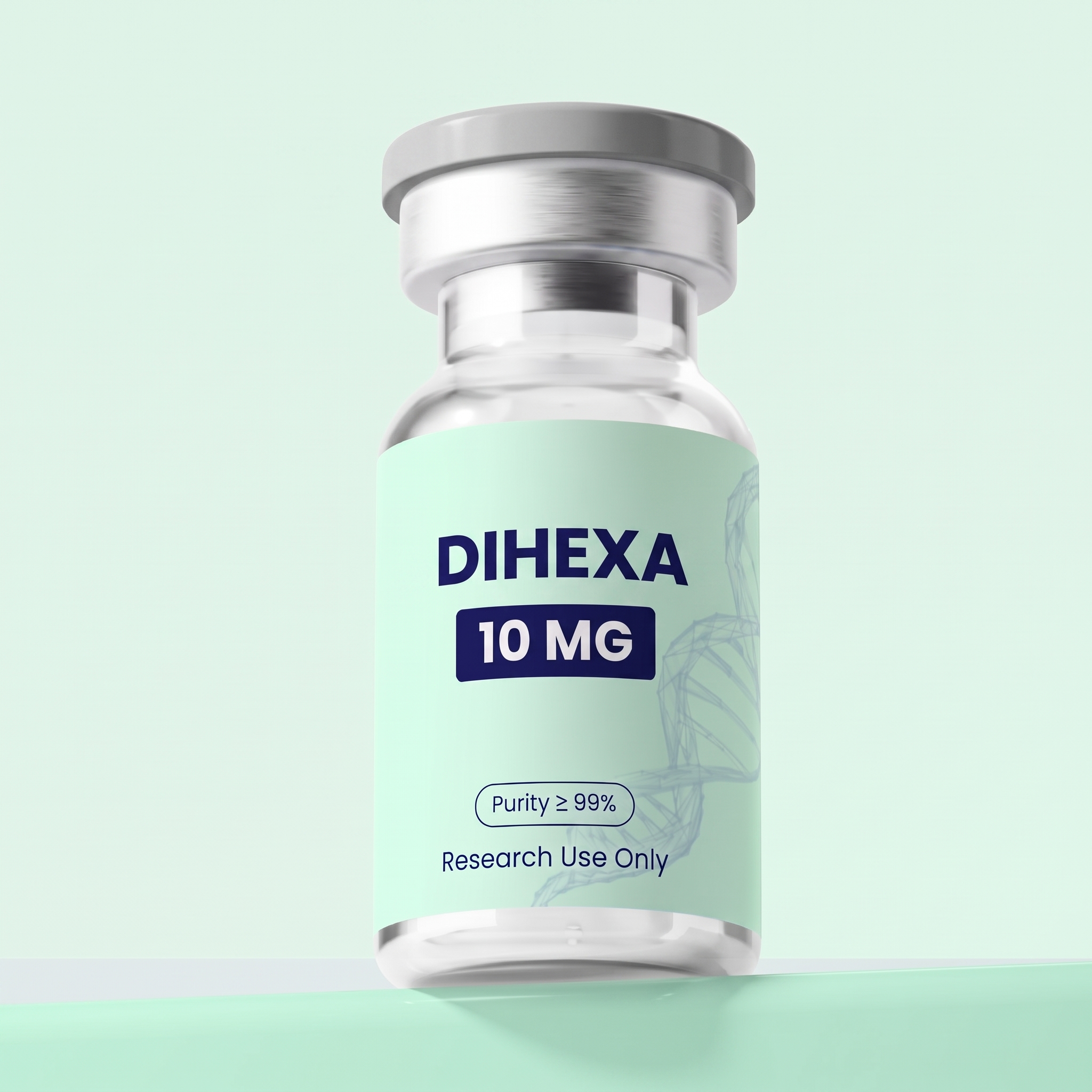
Dihexa (PNB-0408) is a synthetic small molecule derived from angiotensin IV, developed at Washington State University by the Harding lab. It is a hepatocyte growth factor (HGF) mimetic that activates HGF/c-Met signaling in the brain, promoting synaptogenesis, neuroplasticity, and neuronal survival. Unlike large HGF proteins, Dihexa has good oral bioavailability and crosses the blood-brain barrier. In APP/PS1 Alzheimer's model mice, Dihexa activated the PI3K/AKT pathway, reduced neuroinflammation, and rescued cognitive impairment. It has also shown promise for peripheral nerve regeneration and protection against chemical ototoxicity. No human clinical trials exist.
Typical dose
8-10mg oral / 0.5mg/kg IP 1x daily
Once daily
Route
Oral
Oral protocols are taken once daily, typically in the morning for cognitive effects. Subcutaneous protocols use lower doses due to higher bioavailability. Some research protocols explore intranasal administration.
Cycle
4-8 weeks Typical duration
Typical duration
Storage
Room temp (oral) / 2-8°C (DMSO stock) Refrigerated
Follow vendor guidance
Marketplace
3 offers for Dihexa
| Vendor | Price | Rating | Shipping | COA | Action |
|---|---|---|---|---|---|
Amino Club
| $30.00 $59.99 $3.00/mg −50% | No reviews | 1–4 days United States | None | |
prpeps
| $45.00 $4.50/mg | No reviews | 2 days United States | None | |
American Peptides
| $140.00 $28.00/mg | No reviews | 1-2 days United States | None |
What the research reports
Outcomes described across the published literature and ongoing study, not promised results. Read each as research context, not a personal guarantee.
Cognitive enhancement
Memory improvement
Neuroplasticity support
Neuroprotection
Learning enhancement
Dosage and protocol
Dihexa is a potent nootropic hexapeptide derived from angiotensin IV. It has demonstrated cognitive-enhancing properties at extremely low concentrations in preclinical research. Research protocols typically use 10-20mg orally or 0.5-2mg via subcutaneous injection. It is among the most potent procognitive agents studied in animal models.
01 Route
Oral, Subcutaneous, Intranasal
02 Example range
10-20mg
03 Frequency
Once daily
04 Timing
Oral protocols are taken once daily, typically in the morning for cognitive effects. Subcutaneous protocols use lower doses due to higher bioavailability. Some research protocols explore intranasal administration.
Educational reference only. Use clinician guidance for dosing decisions.
Evidence
Angiotensin IV and analogs improved cognitive performance in normal and impaired animal models.
PNB-0408 did not protect rats from 3-NP-induced Huntington's disease-like symptoms.
Dihexa's procognitive activity depends on HGF/c-Met system activation.
Therapeutic peptides modulate tissue regeneration and neuroplasticity pathways in orthopaedic applications.
HGF/c-Met receptor activation via Dihexa may facilitate memory and synaptic formation in AD models.
Interactions
Dihexa + TB-500
Often discussed together in recovery-focused research stacks.
Dihexa + GHK-Cu
Sometimes paired in tissue and skin research conversations.
FAQ
Dihexa is a potent nootropic peptide derived from angiotensin IV, researched for its remarkable ability to enhance cognitive function and promote neuroplasticity. It is considered one of the most powerful cognitive-enhancing peptides studied.