 Peptide Grading
 United States
 Switzerland, United Kingdom +29
01
Obesity, with and without type 2 diabetes
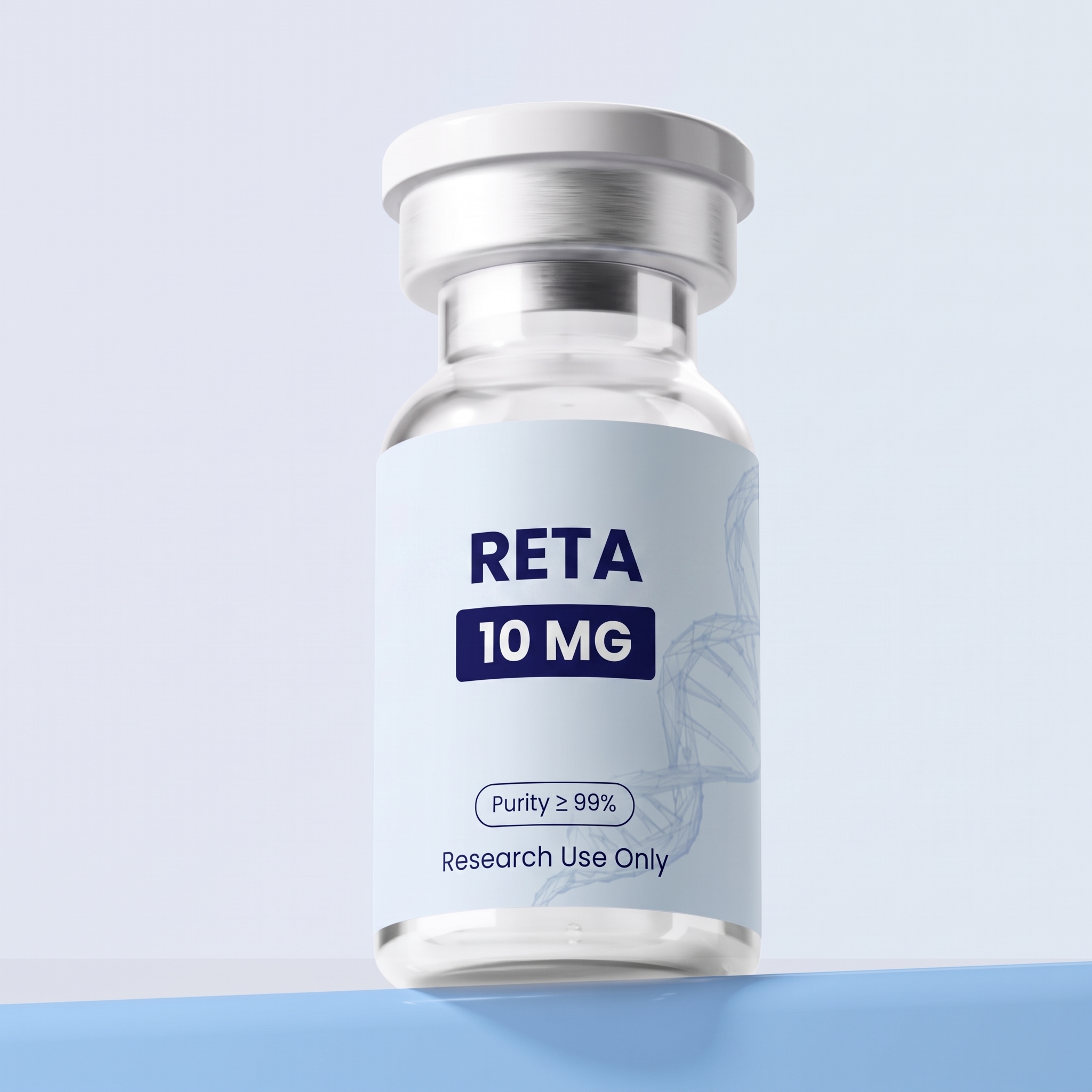
Research peptide
From
$35.00
Vendors
21
Lab tested
29 COAs
Key benefits
Retatrutide is an experimental once-weekly injection from Eli Lilly (internal code LY3437943). It's a single molecule that activates three receptors: GIP, GLP-1, and glucagon. Tirzepatide covers the first two, and retatrutide adds the third. It isn't approved anywhere, for anything. Lilly has said it plans to file with the FDA in the first quarter of 2027.
On Peptide Grading, we list the research-labeled vials with sizes, price per mg, and COAs side by side. Being listed there isn't an endorsement, and those vials aren't Lilly's product.
Typical dose
0.5-12 mg weekly
Weekly, escalate every 4 weeks
Route
Subcutaneous weekly
Once weekly injection, same day each week.
Cycle
Continuous therapy
Typical duration
Storage
2-8°C
Follow vendor guidance
Marketplace
Prices per size, coupon codes, lab reports and shipping.
| Vendor | Price | Coupon | Lab test | Shipping | |
|---|---|---|---|---|---|
 TrustedPeps 10 mg | $35.00 Lowest price$3.50/mg | Not on file | 3 days
| Buy | |
Biologix Labs 5 mg | $37.97$44.99 −15.6%$7.59/mg | 1 COA | 2 Days
| Buy | |
Trulab Peptides 5 mg | $39.00 $7.80/mg | 1 COA | 2–5 days
| Buy | |
HLX LABS 10 mg | $39.98$54.99 −27.3%$4.00/mg | 1 COA | 2–5 days
| Buy | |
Certa Peptides 5 mg | $44.49 $8.90/mg | 1 COA | 1–4 days
| Buy | |
idunpeptides 20 mg | $44.99 $2.25/mg | 3 COAs | 3–7 days
| Buy | |
 GenPeptide 6 mg | $45.00 $7.50/mg | Not on file | 2 days
| Buy | |
Amino Club 10 mg | $45.49$69.99 −35%$4.55/mg | 1 COA | 1–4 days
| Buy |
Compound
Retatrutide
Glucagon is the strange one. Its normal job is raising blood sugar, so putting it into an obesity drug sounds backwards. The reasoning is that glucagon signaling also seems to raise energy expenditure and pull fat out of the liver, while the GIP and GLP-1 parts handle appetite and blood sugar. Early work reported large drops in liver fat, which is a big part of why researchers wanted to test it in fatty liver disease too. How the three signals balance out over years is not known yet.
01
Obesity, with and without type 2 diabetes
02
Knee osteoarthritis pain in people with obesity
03
Obstructive sleep apnea
04
Fatty liver disease
05
Cardiovascular and kidney outcomes
| Compound | Main structural feature | Length | Key distinction |
|---|---|---|---|
| Retatrutide | GIP, GLP-1, glucagon | Investigational | |
| Tirzepatide | GIP, GLP-1 | Approved (Mounjaro, Zepbound) | |
| Semaglutide | GLP-1 | Approved (Ozempic, Wegovy, Rybelsus) | |
| Survodutide | GLP-1, glucagon | Investigational (Boehringer Ingelheim) |
Phase 2 (NEJM, 2023): 338 adults with obesity were followed for 48 weeks. The highest dose group lost an average of about 24% of body weight.
The study TRIUMPH-4 (December 2025) comprised 445 adults with obesity and knee osteoarthritis, studied for 68 weeks. At the highest dosage, Lilly reported 28.7% average weight loss, but this was for individuals who completed the treatment. Counting everyone who was randomized, including those who stopped, the number was about 23.7%. Knee pain scores fell by roughly three-quarters.
Now the part that doesn't make headlines. In TRIUMPH-4, 18.2% of people at the top dose stopped because of side effects, and around one in five reported dysesthesia, an unpleasant skin sensation, compared with under 1% on placebo (8.8% at the lower dose and 20.9% at the higher). Lilly said dropout tracked closely with starting BMI.
TRIUMPH-1, 2 and 3 have since reported positive topline results too (TRIUMPH-1 enrolled 2,339 adults over 80 weeks). In TRIUMPH-2 and 3, treatment stopped due to side effects in 7.7% and 13.5% of people at the top dose. Full papers aren't out yet.
Every one of these results comes from Lilly's own manufactured drug, given and monitored by trial staff.
No label, no approved dosing, no boxed warnings, because there's nothing approved to put them on. The FDA has already issued warning letters to firms marketing products represented as retatrutide for human use. "Research use only" on a vial means in-vitro lab work, and it doesn't make a different legal position.
Retatrutide isn't named on the list, but it falls under S0 (non-approved substances), which covers any drug not approved for human use by a government agency. Treat it as prohibited at all times, and athletes should confirm with their anti-doping organization.
Research reference note
Most listings lead with a price. I'd flip that. Check the lot number, purity, and mass spec first, and skip any listing that can't show them. Then use [Peptide Grading](#vendor-listings) to compare what's left.
FAQ
No. Lilly plans to submit for approval in early 2027, so a decision would come later.