 Peptide Grading
 United States
 Switzerland, United Kingdom +29
01
To study pigmentation, since it clearly raises melanin output
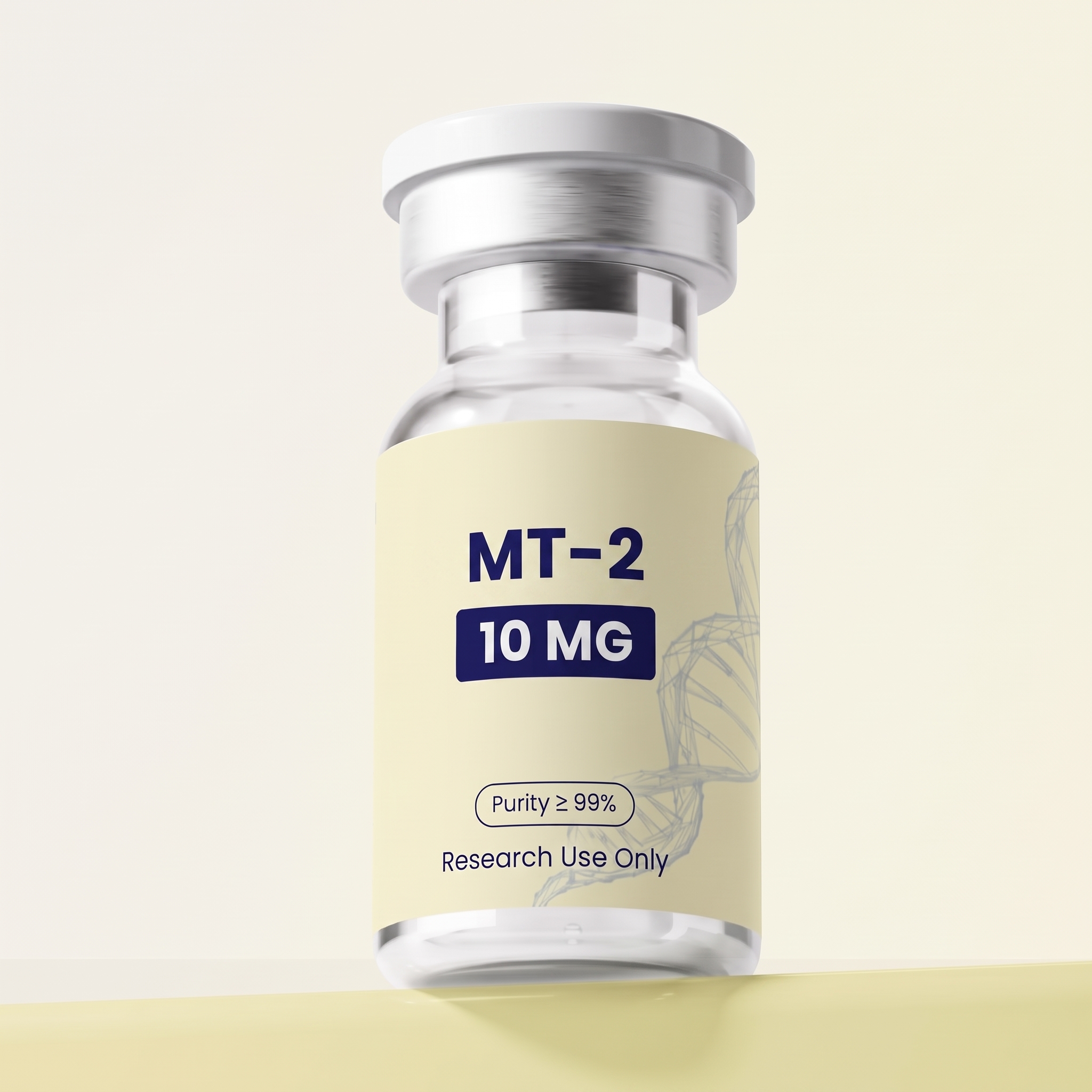
Research peptide
From
$14.98
Vendors
18
Lab tested
-
Key benefits
Melanotan II is a lab-made peptide modeled on α-melanocyte-stimulating hormone (α-MSH), the natural hormone that tells your skin to make pigment. Researchers built it to understand how the melanocortin receptor system works, especially the pathways behind melanin production.
It's tempting to file MT-II under "tanning peptides," but that undersells it. It acts on several receptors, not just one, and that's why human studies have looked at both skin pigmentation and erectile function. The case reports that followed raised some real safety questions.
On Peptide Grading, we track MT-II research listings in one place: vendors, quantities, prices, shipping details, and certificate of analysis (COA) documents, so you don't have to open ten tabs to compare them.
Typical dose
0.25-1mg
Once daily
Route
Subcutaneous
Administered via subcutaneous injection, typically in the evening. Loading phase involves daily low-dose injections for 1-2 weeks. Once desired effect is reached, frequency reduces to maintenance dosing.
Cycle
4-8 weeks
Typical duration
Storage
2-8°C
Follow vendor guidance
Marketplace
Prices per size, coupon codes, lab reports and shipping.
| Vendor | Price | Coupon | Lab test | Shipping | |
|---|---|---|---|---|---|
Amino Club 10 mg | $14.98$29.95 Lowest price−50%$1.50/mg | Not on file | 1–4 days
| Buy | |
idunpeptides 10 mg | $19.99 $2.00/mg | Not on file | 3–7 days
| Buy | |
 PepVida Labs 10 mg | $23.77$35.00 −32.1%$2.38/mg | Not on file | 1-3 days
| Buy | |
Certa Peptides 5 mg | $24.99 $5.00/mg | Not on file | 1–4 days
| Buy | |
Biologix Labs 10 mg | $27.99$34.99 −20%$2.80/mg | Not on file | 2 Days
| Buy | |
 Genesis Biomapping 10 mg | $29.99 $3.00/mg | Not on file | 3 days
| Buy | |
Synthesis Peptides 10 mg | $34.99 $3.50/mg | Not on file | 2–5 days
| Buy | |
 Blue Ridge Peptides 10 mg | $35.00$40.00 −12.5%$3.50/mg | Not on file | 2–3 days
| Buy |
MT-II is α-MSH, edited. A lactam bridge makes it a ring, and norleucine plus D-phenylalanine make it more potent than the original. Pigmentation runs through MC1R on melanocytes. MT-II doesn't stop there, though. It binds other melanocortin receptors too, which is why trial participants got more than a tan.
Compound
Melanotan II
The molecular identity and chemical descriptors are consistent with PubChem records.
Researchers have used MT-II in four main ways:
01
To study pigmentation, since it clearly raises melanin output
02
To probe MC1R signaling
03
To test sexual function
04
To work out what each melanocortin receptor actually does
Human data is thin but hard to ignore. The Phase I volunteers got darker skin, along with nausea, fatigue, yawning, and spontaneous erections. In the placebo-controlled ED trial, 17 of 20 men responded. Nausea and yawning were common again.
| Compound | Main structural feature | Length | Key distinction |
|---|---|---|---|
| Type | Synthetic α-MSH analogue | Synthetic α-MSH analogue | |
| Structure | Cyclic heptapeptide | Linear peptide analogue | |
| Receptor profile | Broader melanocortin activity | Primarily MC1R | |
| Main research interest | Pigmentation and melanocortin pharmacology | MC1R-mediated photoprotection | |
| Clinical status | Unapproved/investigational | Approved for specific medical use |
The two compounds share melanocortin biology but should not be considered interchangeable. Their receptor profiles, clinical development, regulatory status, and evidence base are different.
MT-II is not an approved drug for tanning or anything else. The FDA has flagged risks with compounded versions, including immune reactions linked to aggregation and peptide impurities, and it points to published reports of melanoma, priapism, and sympathomimetic toxicity.
Other case reports describe systemic toxicity and rhabdomyolysis, and some discuss possible renal infarction. These are individual reports. They can't prove MT-II caused the problem, but they can't be waved away either.
The same goes for melanoma. Cases have appeared in people who used MT-II, but timing alone doesn't establish cause. Still, with long-term risk so poorly characterized, it belongs in any honest discussion of this compound.
Research reference note
Look through the available MT-II listings, check the [COA](/coas) documentation, and judge each product on real data. Start on [Peptide Grading](#vendor-listings).
FAQ
It's a modified version built to bind melanocortin receptors more strongly and stay active longer.